The Fifth International Workshop on Human Brain and Artificial Intelligence (HBAI 2026)

Welcome to HBAI 2026, the fifth International Workshop on Human Brain and Artificial Intelligence. This workshop is planned to be held in Bremen, Germany, on one day within August 16 to 21, 2026, as a fully in-person event associated with IJCAI 2026. The quest for brain research is to uncover the nature of brain cognition, consciousness, and intelligence. Simultaneously, Artificial Intelligence (AI) is committed to the realization of machine-borne intelligence. We are currently witnessing a historic convergence of these fields into the rapidly emerging discipline of NeuroAI.

To bring together active researchers and practitioners at the frontiers of Artificial Intelligence and Brain Research, we propose the 5th International Workshop on Human Brain and Artificial Intelligence (HBAI 2026). This workshop continues the successful legacy of HBAI (previously held at IJCAI 2019, 2021, 2022, and 2024).

HBAI 2026 will focus on mechanistically understanding the human brain through AI (Brain Computing) and developing the next generation of AI algorithms inspired by neural mechanisms (Brain-Inspired Computing). The discussion will cover neural computation, artificial general intelligence (AGI), brain-machine interfaces, and cognitive data science.

Workshop History & Audience

HBAI is an established workshop series successfully held at IJCAI. Past workshops have published high-quality proceedings in Springer's Communications in Computer and Information Science (CCIS) series: HBAI 2024 (CCIS Vol. 2225), HBAI 2022 (CCIS Vol. 1757), HBAI 2021 (CCIS Vol. 1369, for IJCAI-PRICAI 2020/2021), and the inaugural HBAI 2019 (CCIS Vol. 1072) which attracted ~60 attendees.

Based on this history, we estimate an audience of 50-80 participants for the in-person event in Bremen. Given the high profile of our invited speakers and the surging interest in NeuroAI, we expect strong participation.

Aims and Scope

HBAI 2026 aims to unveil the latest discoveries at the nexus of human brain research and AI, highlighting the synergetic potential that bridges these two domains. The workshop is designed to promote active exchange between the AI and Neuroscience communities, featuring distinguished keynote speakers and presentations of peer-reviewed research.

Workshop Topics

We encourage papers with important new insights at the intersection of AI and computational brain science. Topics include, but are not limited to:

NeuroAI & Biologically Plausible Intelligence:

  • Neuromorphic computing and Spiking Neural Networks (SNNs)
  • Learning and plasticity rules
  • Neural mechanism of behavior
  • Generalization
  • Deep learning models of the brain

AI for Brain Science & Decoding:

  • Brain-Machine Interfaces (BMI) / Brain-Computer Interfaces (BCI)
  • Neural decoding and encoding models
  • Graph theory and knowledge graphs for brain connectivity
  • Machine learning for neuroimaging (fMRI, EEG, MEG)
  • Analysis of brain health, aging, and disorders
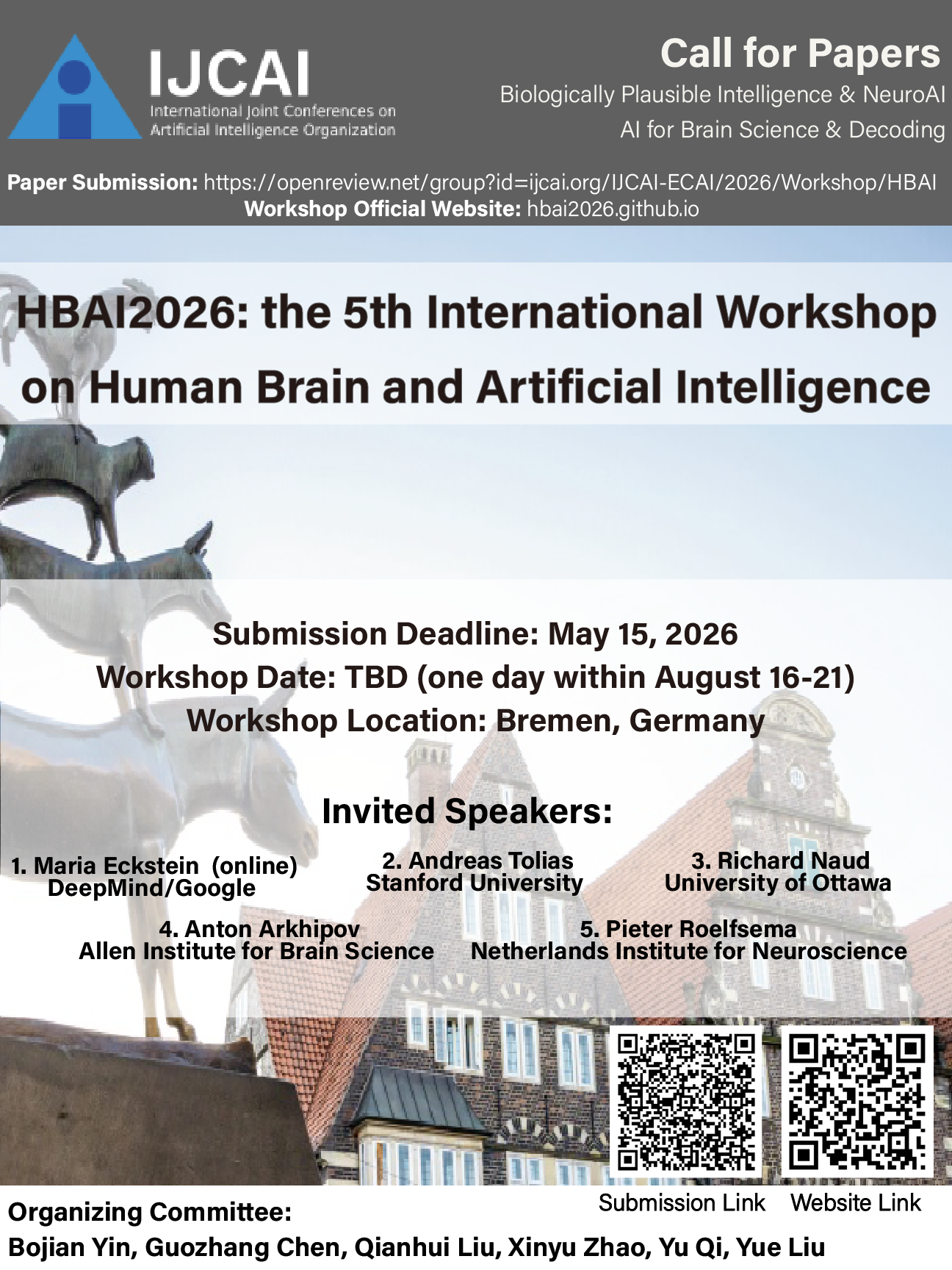
HBAI 2026 Workshop Poster

Program for HBAI 2026

The workshop is designed to promote active exchange between the AI and Neuroscience communities. We have confirmed a lineup of distinguished speakers who will discuss the state-of-the-art in NeuroAI. The schedule balances these 30-minute keynotes with oral presentations from accepted papers to foster deep technical discussion.

Time Activity & Session Theme
08:30-08:40Opening Remarks
08:40-09:10Invited Talk 1: Richard Naud (30 min)
09:10-09:40Invited Talk 2: Andreas Tolias (30 min)
09:40-10:20Session 1: Neural Circuit Dynamics & Computing
10:20-10:40Coffee Break and Poster Presentation
10:40-11:10Invited Talk 3: Pieter Roelfsema (30 min)
11:10-12:15Session 2: Biologically Plausible Learning & Plasticity
12:15-13:30Lunch Break and Poster Presentation
13:30-14:00Invited Talk 4: Anton Arkhipov (30 min)
14:00-14:30Invited Talk 5: Maria Eckstein (30 min, online)
14:30-15:30Session 3: Brain-Machine Intelligence & Decoding
15:30-16:00Coffee Break and Poster Presentation
16:00-17:30Session 4: Cognitive AI & Future Directions

Invited Speakers: Frontiers in NeuroAI

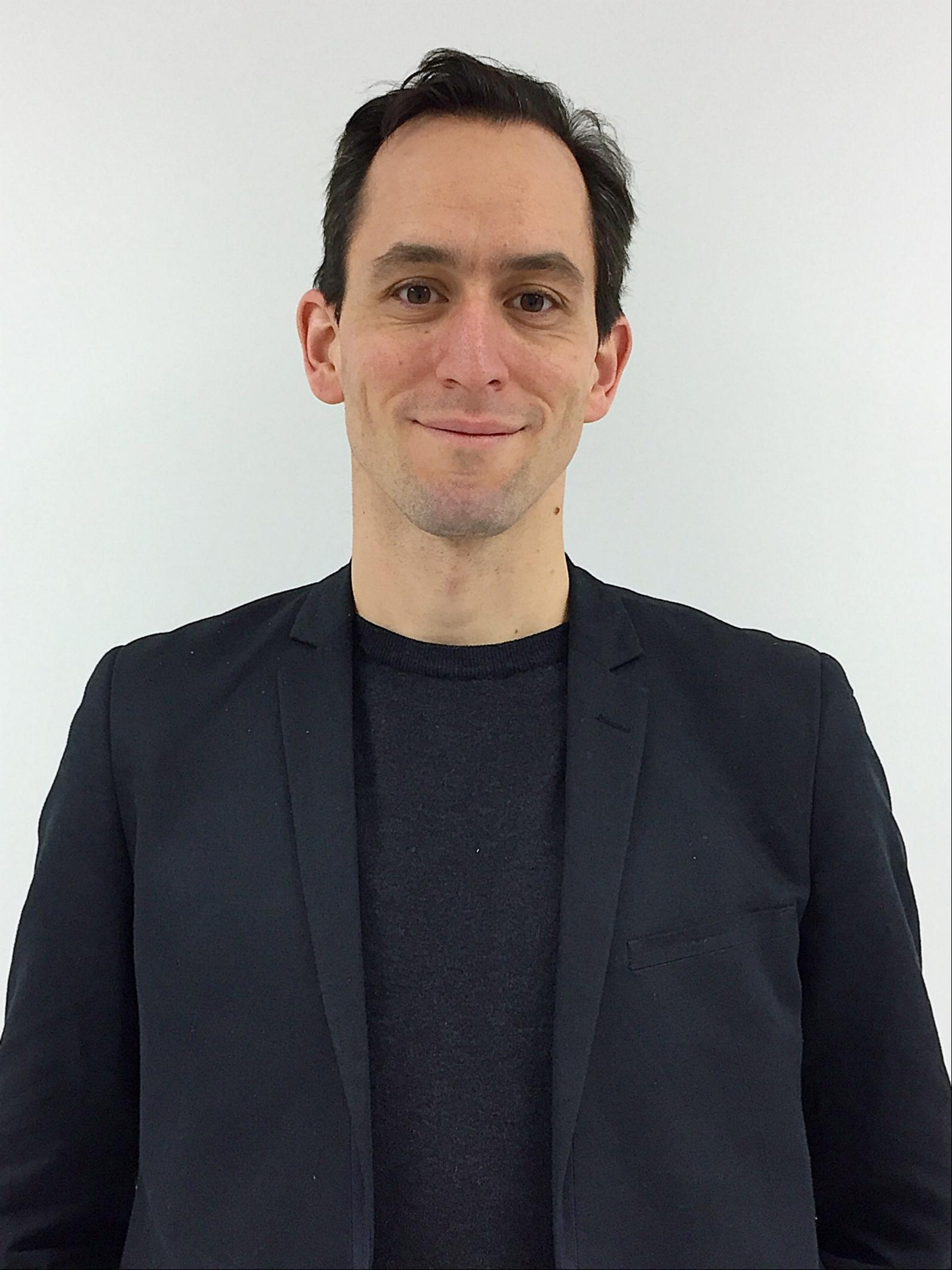
Richard Naud
Richard Naud
University of Ottawa
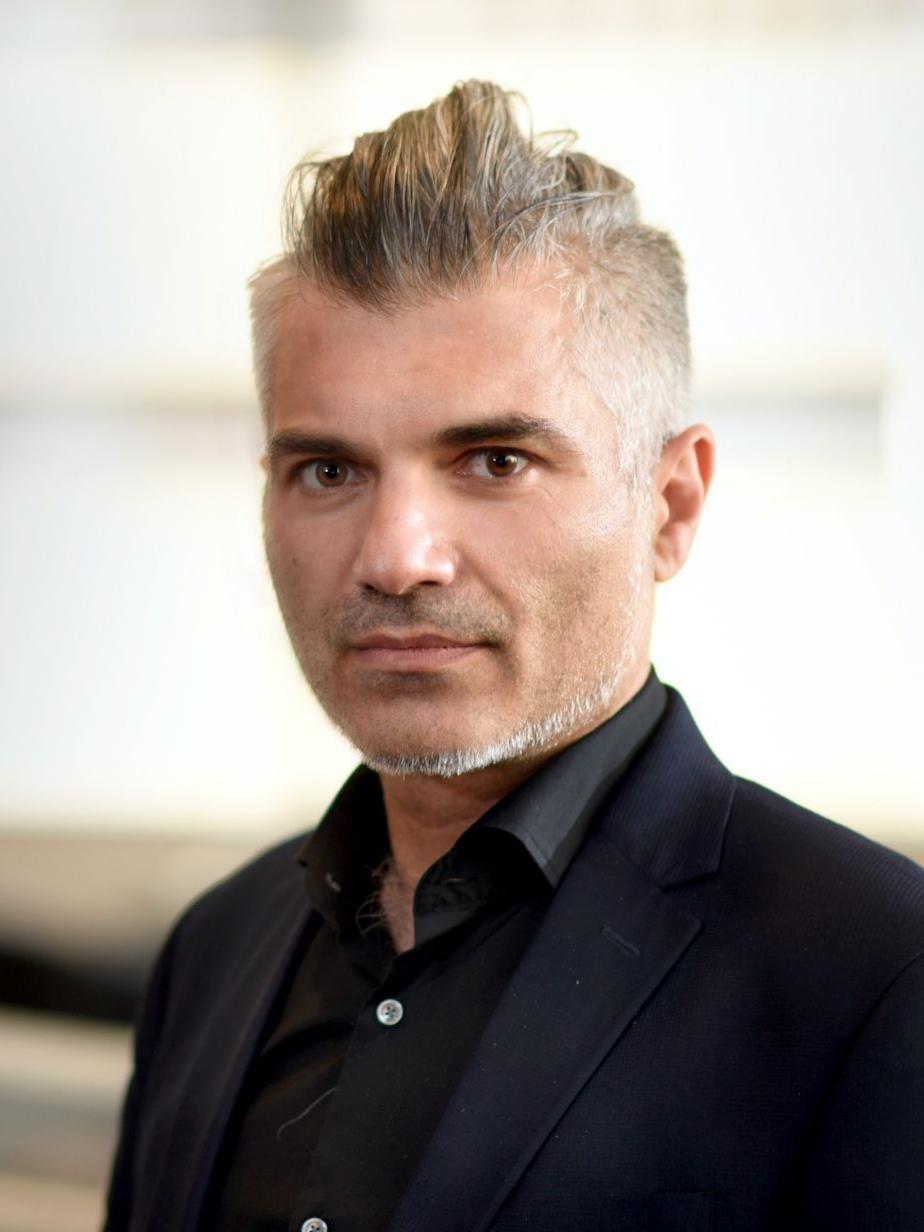
Andreas Tolias
Andreas Tolias
Stanford University
Pieter Roelfsema
Pieter Roelfsema
Netherlands Institute for Neuroscience
Anton Arkipov
Anton Arkhipov
Allen Institute for Brain Science
Maria Eckstein
Maria Eckstein
DeepMind/Google

Call for Papers

The Fifth International Workshop on Human Brain and Artificial Intelligence (HBAI 2026)

Held in Conjunction With IJCAI 2026

August 15 to 21, 2026 - Bremen, Germany

Important Dates (Tentative)

Submission Deadline
May 15, 2026
Author Notification
TBD
Camera Ready Deadline
TBD
Workshop Date
TBD (one day within August 16-21)
All deadlines are 23:59 Anywhere on Earth (UTC−12), and all dates refer to the year 2026

Paper Submission

HBAI 2026 will not accept any paper that, at the time of submission, is under review for, has already been published in, or has already been accepted for publication in, a journal or another venue with formally published proceedings.

At least one author of each accepted paper is required to participate and present the work in person at the workshop in Bremen.

All new papers will be peer-reviewed in a double-blind manner.

All papers for the review should be submitted through the OpenReview.

Submit via OpenReview

Formatting guidelines:

...

Primary Contact

Xinyu Zhao

zhaoxinyu@mail.tsinghua.edu.cn

(+86) 13717645856

Organizing Committee

Xinyu Zhao Tsinghua University zhaoxinyu@mail.tsinghua.edu.cn
Homepage: Link
Guozhang Chen Peking University guozhang.chen@pku.edu.cn
Homepage: Link
Bojian Yin Institute of Automation, Chinese Academy of Sciences bojian.yin@ia.ac.cn
Homepage: on going
Yu Qi Zhejiang University qiyu@zju.edu.cn
Homepage: Link
Yue Liu Florida Atlantic University yueliu@fau.edu
Homepage: Link
Qianhui Liu Shandong University qhliu@sdu.edu.cn
Homepage: on going

Program Committee

(Including full names and affiliations, in alphabetical order by the member's first name)

An ZengGuangdong University of Technology, China
Bo LeiThe Beijing Academy of Artificial Intelligence, China
Chaifei FanStanford University, US
Chaoming WangGuangdong Institute of Intelligence Science and Technology, China
Chun XuThe Institute of Neuroscience, Chinese Academy of Sciences, China
Dan PanPolytechnic Normal University Guangzhou, China
Darrel HauflerAllen Institute for Brain Science, US
Dong LiNantong University, China
Dongping YangShenzhen Loop Area Institute, China
Douglas ZhouShanghai Jiaotong University, China
Guoqi LiThe Institute of Automation, Chinese Academy of Sciences, China
Hemmings WuSecond Affiliated Hospital, Zhejiang University School of Medicine, China
Huan GaoCarnegie Mellon University, US
Jiajun ChenZhejiang University, China
Jian LiuUniversity of Birmingham, UK
Jibin WuHong Kong Polytechnic University, Hong Kong
Junjie JiangXi'an Jiaotong University, China
Kai DuTsinghua University, China
Le WuUniversity of Science and Technology of China, China
Lei DengTsinghua University, China
Pedro V. CarelliUniversidade Federal de Pernambuco, Brazil
Qing LiBeijing Institute of Technology, China
Quanying LiuSouthern University of Science and Technology, China
Richard NaudUniversity of Ottawa, Canada
Sander M BohteCentrum Wiskunde & Informatica, Netherlands
Sebastian OtteUniversity of Tübingen, Germany
Shinya ItoAllen Institute for Brain Science, US
Shuang QiuInstitute of Automation, Chinese Academy of Sciences, China
Songting LiShanghai Jiaotong University, China
Taiping ZengFudan University, China
Tiejun HuangPeking University, China
Wenguan WangZhejiang University, China
Wolfgang MaassGraz University of Technology, Austria
Yujie WuHong Kong Polytechnic University, Hong Kong
Zhaofei YuPeking University, China